

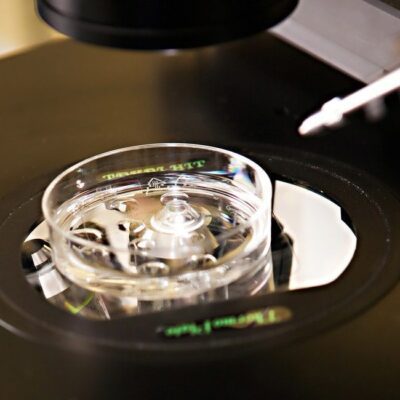
In Vitro Fertilization (IVF) is an assisted reproductive technology (ART) that may help individuals and couples experiencing infertility. During IVF, eggs are retrieved from the ovaries and fertilized with sperm in an embryology laboratory. Following fertilization, the resulting embryos are monitored during their development before a selected embryo is transferred into the uterus, where implantation may occur and lead to pregnancy.
IVF may be considered for various fertility conditions, including blocked fallopian tubes, ovulation disorders, certain cases of male factor infertility, endometriosis, unexplained infertility, and previous unsuccessful fertility treatments. IVF may also be considered in selected cases of recurrent pregnancy loss, depending on the underlying cause and individual medical evaluation.
Every fertility journey is different. At Neelkanth IVF, fertility specialists assess individual medical histories, fertility evaluation findings, and reproductive goals to develop treatment plans based on each patient’s clinical requirements.
IVF may be considered for individuals or couples experiencing:
Blocked or damaged fallopian tubes
Severe male factor infertility
Certain ovulation disorders
Endometriosis
Polycystic Ovary Syndrome (PCOS), depending on individual fertility factors
Unexplained infertility
Recurrent pregnancy loss in selected cases, depending on the underlying cause
Age-related fertility concerns
Previous unsuccessful IUI or IVF cycles
An IVF cycle involves several stages, and the overall duration may vary depending on the treatment protocol and individual medical requirements. An ovarian stimulation and fresh embryo transfer cycle may take approximately 4 to 6 weeks, although some treatment plans may require additional time.
A fertility evaluation is performed, which may include medical history, hormone testing, ultrasound examination, and semen analysis, as appropriate. Based on the findings, a treatment plan is developed according to individual clinical requirements.
Fertility medications may be prescribed to stimulate the ovaries to develop multiple follicles, with the aim of obtaining eggs for fertilization.
Ultrasound scans and, when required, blood tests are used to monitor follicle growth and hormone levels. A trigger injection may be administered when the follicles reach an appropriate stage of development.
Egg retrieval is generally performed approximately 34–36 hours after the trigger injection. Eggs are collected through an ultrasound-guided procedure, typically with sedation or anesthesia as clinically appropriate.
Retrieved eggs are inseminated or injected with sperm in an embryology laboratory using conventional IVF or ICSI, depending on the fertility assessment and treatment plan.
Following fertilization, embryos are monitored during laboratory culture, commonly for 3 to 5 days and sometimes longer, depending on their development and the treatment protocol. Embryo assessment helps guide decisions about transfer or cryopreservation.
A selected embryo may be transferred into the uterus using a thin catheter. Embryo transfer is generally an outpatient procedure and typically does not require anesthesia. The number of embryos transferred depends on clinical considerations and applicable guidelines.
A blood pregnancy test is generally performed approximately 9–14 days after embryo transfer, depending on the embryo stage and treatment protocol, as advised by the fertility specialist.
May be considered for various infertility conditions based on individual medical evaluation
Provides a treatment option when certain other fertility treatments may not be suitable or have been unsuccessful
May involve laboratory techniques such as ICSI, IMSI, PICSI, and embryo cryopreservation, where clinically indicated and available
Allows embryo cryopreservation for future use; egg and sperm freezing are separate fertility preservation procedures
May provide options for preimplantation genetic testing in selected cases following appropriate medical and genetic counselling
Treatment planning can be adapted according to individual fertility needs and clinical findings

IVF (In Vitro Fertilization) is a fertility treatment in which eggs are fertilized with sperm outside the body in an embryology laboratory. The resulting embryos are monitored during development, and a selected embryo may be transferred into the uterus to attempt pregnancy.
IVF may be considered for individuals or couples with blocked fallopian tubes, certain cases of severe male factor infertility, endometriosis, ovulation disorders, unexplained infertility, or previous unsuccessful fertility treatments. It may also be considered in selected cases of recurrent pregnancy loss, depending on the underlying cause and medical evaluation.
The level of discomfort during IVF varies between individuals and treatment stages. Ovarian stimulation injections may cause temporary discomfort, and some individuals may experience bloating or cramping. Egg retrieval is generally performed with sedation or anesthesia, while embryo transfer typically requires no anesthesia, although mild discomfort may occur.
IVF success rates vary depending on factors such as age, embryo development, sperm parameters, underlying fertility conditions, and individual medical history. A fertility specialist can discuss the likelihood of treatment success based on the patient's clinical evaluation.
An IVF cycle involving ovarian stimulation and fresh embryo transfer may take approximately 4 to 6 weeks, including monitoring, egg retrieval, fertilization, embryo culture, embryo transfer, and pregnancy testing. The overall duration may vary depending on the treatment protocol, and some cycles may involve embryo freezing and transfer at a later date.
The number of embryos transferred depends on factors such as the patient's age, embryo development, medical history, and applicable clinical guidelines. Single embryo transfer is often considered to reduce the risks associated with multiple pregnancies. A fertility specialist can discuss the appropriate approach based on individual circumstances.
Quick Links